Hiring a property manager is supposed to reduce the owner’s operational burden. The manager collects rent, communicates with tenants, coordinates repairs, conducts inspections and keeps the property functioning while the owner concentrates on larger decisions. A good manager can save an owner enormous time and protect both income and property value.
Delegating the work, however, does not answer a more important question: is the work producing the result the owner expects?
A manager can close a work order without resolving the problem. A contractor can submit an invoice without supplying acceptable completion evidence. A tenant can receive several messages while still feeling ignored. A repair can appear finished and then fail again two weeks later. The owner may not discover the difference until a tenant leaves, a claim is disputed, a building component deteriorates or the management relationship ends.
The question is therefore not whether the property manager appears busy. It is whether the available evidence shows that the property is being protected, the tenant experience is being managed, the owner’s instructions are being followed and unresolved matters are reaching the owner before they become expensive.
Table of contents
Management activity is not owner assurance
Property management software is generally designed to help the manager run operations. It records rent, requests, inspections, vendors, messages and work orders from the manager’s perspective. That operational record can be useful and accurate, but it is not automatically the owner’s independent record.
The distinction matters because the manager controls the system, selects what is entered and determines how activity is classified. When the owner changes managers, access may change as well. Even when records are eventually exported, the owner may receive documents and transaction histories without the context that explains why decisions were made, what was promised and whether the real-world result matched the original goal.
This does not mean the property manager is dishonest. It means the manager’s software exists to support the manager’s work. The owner still needs a durable view of the asset that survives changes in managers, contractors, tenants, insurers, brokers and other specialists.
The owner-level question is not simply, “Was a work order closed?” It is, “What problem was reported, what outcome was expected, what evidence confirms the outcome and what remains unresolved?”
Begin with the owner’s goals and the management agreement
There is no single definition of good property management because owners delegate different levels of authority and pursue different goals.
One owner may authorize a manager to approve every repair below $1,000. Another may require three quotes before any non-emergency work. One owner may prioritize tenant retention and preventive maintenance. Another may be preparing the property for refinancing or sale and need stronger documentation of completed capital work.
In British Columbia, the property management service agreement establishes matters such as the manager’s scope of authority, accounting records, compensation and termination provisions. The British Columbia Financial Services Authority notes that some owners want to approve every repair while others give their manager broader authority below an agreed threshold. The agreement should therefore be the starting point for evaluating performance, not an afterthought. See the BCFSA Consumer Guide to Tenancies.
The owner should be able to identify the expected result for each major responsibility. For example, the goal of repair coordination is not merely to hire a contractor. It is to restore the affected component to an acceptable condition within an appropriate time, communicate with the tenant, preserve the evidence and escalate anything that cannot be resolved within the manager’s authority.
This goal-based approach prevents an owner from confusing activity with performance.
The evidence chain an owner should expect
Good oversight does not require the owner to participate in every phone call or supervise every contractor. It requires a reliable evidence chain from the original issue to the verified result.
| Stage | Evidence the owner should be able to see | What may require attention |
|---|---|---|
| Issue reported | Date, location, description, photographs when appropriate, urgency and effect on the tenant or property | Vague descriptions, no priority, no acknowledgement or repeated reports of the same problem |
| Assessment | Manager or contractor findings, immediate risk, recommended response and any need for a qualified specialist | A solution chosen without a diagnosis, material contradictions or no explanation of risk |
| Authorization | Approved scope, price or estimate, authorized signer, spending authority and expected completion date | Work outside delegated authority, missing quote information or an undefined result |
| Work performed | Attendance date, change orders, access records, progress updates and relevant photographs | Long gaps, unexplained delays, repeated access attempts or changes made without approval |
| Completion | Final invoice, completion photographs, warranty, permit or inspection record when applicable and remaining deficiencies | A closed work order supported only by an invoice or the statement “done” |
| Outcome confirmation | Tenant acknowledgement, follow-up inspection, equipment test or other evidence that the original problem is resolved | Tenant reports that the issue continues, the repair fails again or no one checks the result |
| Lifecycle record | Final cost, completion date, contractor, warranty period, affected system and future maintenance requirement | Evidence remains scattered across email, phones and the outgoing manager’s software |
Not every repair needs the same level of documentation. Replacing a low-cost consumable does not require the evidence package expected for a roof repair, electrical upgrade, water loss or building-envelope investigation. The level of evidence should reflect safety, cost, potential damage, insurance exposure, tenant impact and the owner’s stated goals.
What matters is that the owner can trace the conclusion back to facts.
What a failed repair process looks like
Consider a common scenario.
An owner hires a property manager and reasonably expects the manager to handle tenant communication and repairs. The tenant reports several problems. Some work is attempted, but communication is inconsistent and the tenant does not believe the problems were properly resolved. The manager continues reporting that matters are being handled.
Eventually, the tenant leaves. The owner conducts the move-out inspection personally and hears the complete account for the first time. The owner then discovers that some repairs were incomplete, other work was poorly performed and important communication never reached them. A dispute involving a door and the strata must now be reconstructed from scattered messages, incomplete photographs and conflicting descriptions.
The largest loss may not be the repair invoice. It may include vacancy, turnover costs, tenant dissatisfaction, repeated contractor work, lost evidence, a weakened claim and the owner’s time spent rebuilding a history that should already exist.
No single record necessarily exposes the failure. The manager may have messages. The contractor may have an invoice. The strata may have its own correspondence. The tenant may have photographs. The owner’s problem is that no independent record connects those fragments to the original goal and the final outcome.
This is exactly where an owner-level evidence system becomes valuable.
Tenant communication must be measured by its result
Communication volume is a poor performance measure. Ten messages can still produce confusion, while one clear message can set expectations and resolve a problem.
The owner needs to understand whether the communication accomplished its purpose. Did the tenant know the next step? Was access successfully arranged? Did the tenant understand delays? Did the manager confirm that the repair addressed the reported issue? Is tenant sentiment improving, stable or declining after the intervention?
In British Columbia, tenants are expected to inform the landlord when maintenance or repairs are needed, while landlords are responsible for most repairs. The province also prescribes formal requirements for condition inspections and reports, which can carry evidentiary weight in a dispute. See the provincial guidance on repairs and maintenance and the Residential Tenancy Regulation.
Tenant sentiment does not replace an inspection, invoice or professional conclusion. It supplies a different kind of evidence: the experience of the person affected by the manager’s work.
FolioProjects uses structured HueFlux responses to connect stakeholder experience to a particular asset, project, lifecycle stage and owner goal. The purpose is not to publish star ratings or invite unstructured attacks. It is to identify whether the people affected by an intervention are reporting an outcome consistent with what the owner was told.
When a manager reports completion but structured tenant feedback continues to identify the same unresolved condition, the owner has a reason to request more evidence. When the tenant confirms that access, communication and the repair were satisfactory, that result becomes useful evidence as well.
What good property management looks like from the owner’s position
A good manager does not need to produce a large report for every routine matter. Good performance is visible through consistency.
The manager understands their authority, communicates exceptions, preserves relevant evidence and escalates matters that exceed the agreed scope. Repairs are not considered successful merely because money was spent. Open issues do not disappear when a vendor submits an invoice. Tenant concerns are acknowledged without allowing every preference to become an emergency. Owners receive enough context to make decisions without being dragged back into daily operations.
Over time, the evidence should show several patterns.
First, important matters reach the owner before they become crises. Second, routine work is completed without unnecessary owner involvement. Third, costs and timelines are explainable. Fourth, repeated problems are recognized as patterns rather than processed as unrelated work orders. Fifth, the owner can recover the history of a repair, inspection, claim or decision without searching across several inboxes.
Most importantly, the property’s condition, tenant experience and financial performance should support the owner’s goals. A manager can follow every internal procedure and still be the wrong manager if the outcomes continually diverge from what the owner hired them to achieve.
When owner intervention is required
The purpose of owner oversight is not to make the owner anxious about every unfinished task. It is to identify the relatively small number of situations where waiting creates additional risk.
Intervention may be required when a safety concern remains open, a repair exceeds its expected completion date without explanation, the manager cannot provide acceptable evidence, tenant sentiment declines after claimed completion, the same deficiency repeatedly returns, a contractor’s result does not match the approved scope or the manager acts outside the authority established in the service agreement.
A useful alert should explain the evidence and the required response. It should not simply announce that something is late.
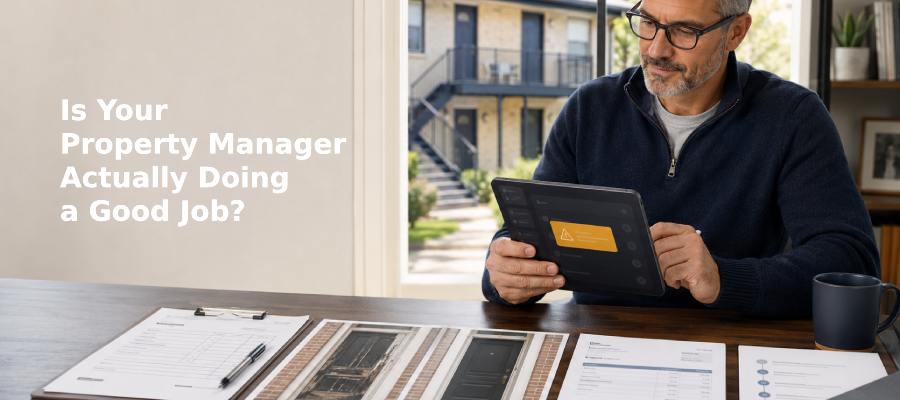
Owner intervention required: Tenant satisfaction is declining, two repair findings remain unresolved, and the completed door repair lacks acceptable completion evidence. Contact the property manager by Friday and request corrective action.
That message is valuable because it connects four things: the owner’s goal, the manager’s reported activity, the available evidence and the consequence of continued inaction.
The appropriate intervention may be modest. The owner might request photographs, ask for a contractor follow-up, require the manager to contact the tenant or clarify which party is responsible. More serious patterns may justify reviewing the service agreement, limiting authority, requesting a complete record export, involving a managing broker, obtaining professional advice or replacing the manager.
The software should not make that final decision for the owner. It should make the divergence difficult to miss.
Why the owner needs an independent lifecycle record
The property manager’s operational system should be a source of facts, not the permanent home of the owner’s asset history.
Managers change. Brokerages merge or close. Contractors disappear. Tenants move. Software subscriptions end. The property remains.
An independent lifecycle record preserves the information that matters after those relationships change: inspections, recurring maintenance, tenant communication outcomes, repair evidence, warranties, permits, costs, unresolved findings, manager updates and owner decisions.
This does not require FolioProjects to become another property management platform. The property manager can continue using the software designed for rent collection, work orders, accounting and daily communication. FolioProjects sits at the owner level, connecting selected facts from those systems to the asset, the owner’s goals and the real-world result.
As FolioProjects integrations expand, updates can move from underlying systems into the owner’s record automatically. Before those integrations exist, owners can add reports, photographs, invoices, messages and scheduled expectations directly. Timed events remain meaningful even when no new file arrives. If evidence was expected by a certain date and never arrived, that absence becomes part of the record.
The owner is not duplicating the manager’s work. The owner is preserving the intelligence needed to govern the asset.
How the question changes across a portfolio
For an owner with one property, the immediate question may be whether a particular repair was handled correctly. Across a portfolio, the question becomes more strategic.
Which properties have the most unresolved findings? Where is tenant sentiment declining? Which manager or contractor repeatedly fails to provide completion evidence? Which assets have rising repair costs, missed maintenance, upcoming warranty deadlines or unresolved insurance questions? Where would owner attention protect the most value?
Portfolio planning prevents every issue from appearing equally urgent. An overdue cosmetic repair at one property may deserve monitoring, while incomplete water-entry work at another requires immediate intervention. A stable property with satisfied tenants may need little owner attention, freeing the owner to concentrate on an entitlement opportunity, major renovation or planned sale elsewhere.
This is why FolioProjects connects operating oversight to portfolio intelligence. The owner can filter assets by risk, value, geography, lifecycle stage, outstanding evidence and current goal. The same record that identifies a management concern today can later support refinancing, capital planning, insurance review or disposition.
The manager sees the operational queue. The owner sees where intervention and capital can create or protect the greatest value.
A practical owner review rhythm
An owner does not need to monitor the platform continuously. The review frequency should follow the property’s risk and the owner’s goals.
Routine operating properties may warrant a concise monthly or quarterly review covering unresolved findings, major repairs, tenant sentiment, expenses outside normal ranges and missing evidence. Active renovations, insurance matters, safety concerns or tenant disputes may require more frequent checkpoints. Low-risk assets can remain in monitoring mode until a timed event, new finding or goal-based threshold requires attention.
A useful review asks five questions:
-
What changed since the last review?
-
Which claims are supported by acceptable evidence?
-
What remains unresolved, late or contradictory?
-
Where is the property diverging from the owner’s goal?
-
What, if anything, requires owner intervention now?
The result should be a short decision list, not another stream of operational noise.
Frequently asked questions
Does owner oversight mean I should micromanage my property manager?
No. The purpose is to establish goals, evidence expectations and escalation thresholds so the manager can handle ordinary operations without unnecessary owner involvement. Good oversight reduces micromanagement because the owner only intervenes when the evidence indicates that attention is required.
Should I use my property manager’s portal as my permanent property record?
Use the portal for the operations it supports, but preserve owner-critical evidence independently. Your service agreement, export rights and the manager’s system determine what remains available when the relationship ends. The owner’s lifecycle history should not depend entirely on continued access to someone else’s platform.
Is an invoice enough to prove that a repair was completed properly?
An invoice proves that a vendor billed for work. Depending on the cost and risk, completion may also require photographs, testing, inspection records, warranty information, tenant confirmation or professional sign-off. The evidence should match the consequence of failure.
Is tenant satisfaction reliable evidence?
Tenant sentiment is an outcome signal, not a substitute for physical or professional evidence. Structured feedback becomes especially useful when it is tied to a specific repair, communication event or operating goal and compared with other available facts.
How often should I review manager performance?
The frequency should reflect the property’s risks and activity. Stable assets may need a monthly or quarterly owner review. Major repairs, disputes, claims and improvement projects may justify more frequent evidence checkpoints. Goal-based alerts should bring exceptional matters forward between scheduled reviews.
What should I do if my manager will not provide adequate records?
Review the service agreement, request the specific records in writing and preserve the communication. Depending on the circumstances, the owner may need to speak with the brokerage’s managing broker or obtain legal or regulatory guidance. FolioProjects organizes the owner’s evidence but does not provide legal advice or determine whether a manager has met a professional obligation.
Delegate the work without surrendering control of the asset
A property manager can be excellent at operations while the owner still maintains an independent record. These are complementary responsibilities.
The manager performs the work. The owner defines the goal and retains the evidence needed to understand whether the goal was achieved. FolioProjects connects those goals, updates, documents, findings, structured stakeholder responses and real-world outcomes across the life of the property.
One avoided vacancy, failed repair or lost claim could pay for years of maintaining that record.
Start with a property, review the sample Property Intelligence Snapshot, or explore FolioProjects pricing.
FolioProjects provides informational support, owner oversight and property lifecycle intelligence. It does not provide legal, real estate, insurance, tax, accounting, engineering, lending or financial advice. Confirm consequential decisions with the appropriate qualified professionals.
Sources and further reading
An owner-focused review process
Start with the property records: confirm which systems exist, what maintenance has been completed, which deficiencies remain open, and what capital expenditures are anticipated. Ask the manager to provide dated evidence rather than relying only on a verbal status report.
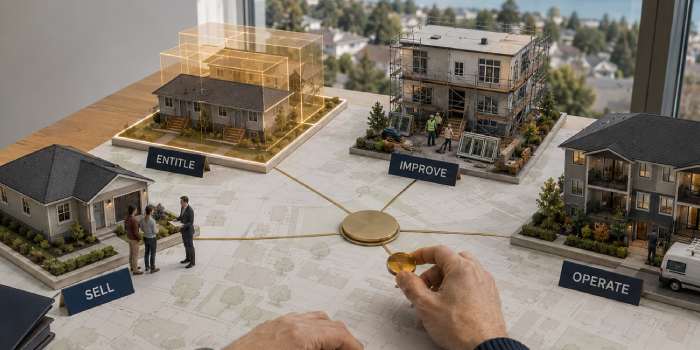
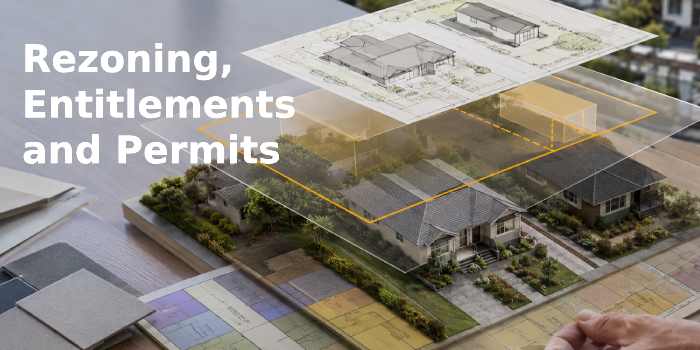
Related reading: Enterprise Asset Management: What It is and Why Is It Important? Rezoning, Entitlements and Permits: What Property Owners Are Actually Trying to Change Entitle, Improve, Operate or Sell? How to Decide What Each Property in Your Portfolio Needs Next.
For owners managing this work, FolioProjects supports property records and portfolios organized around objectives such as Operate. Explore FolioProjects pricing or learn how to set up a property.